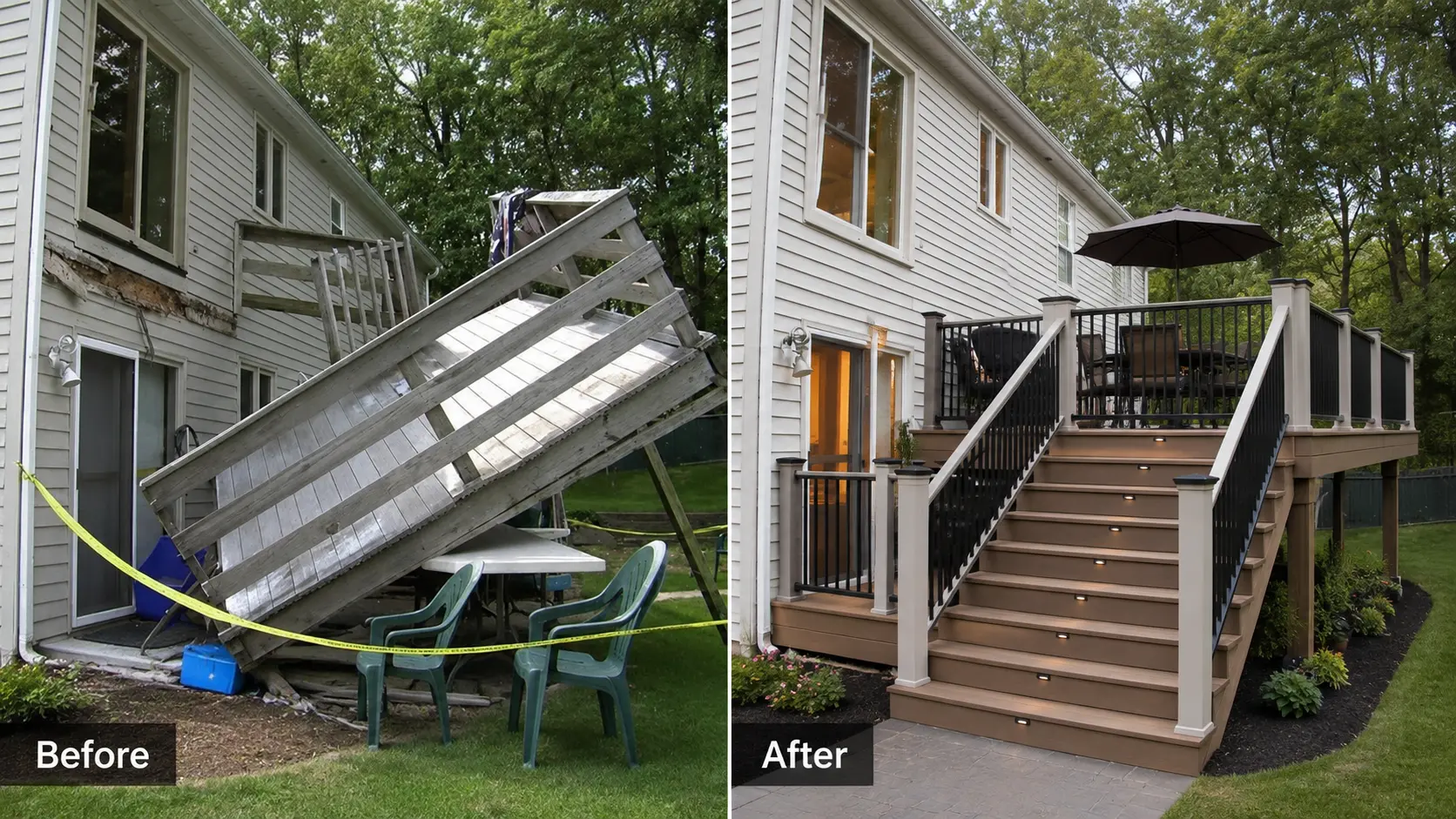
Will Homeowners Insurance Cover a Collapsed Deck?
Summary: Homeowners insurance collapsed deck coverage depends primarily on what caused the deck to fail and what your policy includes. A sudden collapse caused by a covered event, such as wind, a fallen tree, or excessive snow weight, may qualify for coverage. Damage caused by rot, poor maintenance, construction defects, improper footings, or gradual soil movement is less likely to be covered. Minnesota homeowners should secure the area, document the damage, contact their insurer, and arrange for a professional deck inspection before removing or rebuilding the structure.
Is a Collapsed Deck Covered by Homeowners Insurance?
Homeowners insurance may cover a collapsed deck, but coverage is never automatic. The insurance company will investigate the cause of the collapse, the condition of the deck before the incident, and the language in the homeowner’s policy.
A deck physically attached to the house may be treated as part of the dwelling. A freestanding deck may fall under coverage for other structures. However, the classification and available coverage limits can vary by policy.
The most important question is whether the collapse resulted from a covered peril. Insurance policies use the term “peril” to describe the event that caused a loss. Wind, hail, fire, falling objects, and certain winter-weather events may be covered, depending on the policy. Minnesota homeowners should review their deductibles, exclusions, and wind or hail provisions with their insurance representative. :contentReference[oaicite:0]{index=0}
Common Causes of Deck Collapse and Possible Coverage
| Possible Cause | Coverage Outlook | What the Insurer May Review |
|---|---|---|
| Wind or fallen tree | May be covered | Storm reports, photos, tree impact, and policy terms |
| Heavy snow or ice | May be covered | Snow accumulation, structural condition, and collapse coverage |
| Rot or deterioration | Often excluded | Age, maintenance history, moisture damage, and prior warning signs |
| Construction defect | Often disputed or excluded | Ledger attachment, fasteners, permits, footings, and installation records |
| Soil settlement or earth movement | Frequently excluded | Drainage, erosion, footing movement, and policy exclusions |
Storm Damage Can Support a Covered Claim
A deck collapse caused by a sudden Minnesota storm may have a stronger chance of coverage than a failure caused by gradual deterioration. Examples include high winds pulling the deck away from the house, a tree falling onto the structure, or an extreme accumulation of snow placing excessive weight on the framing.
Even when the triggering event is covered, the insurer may examine whether pre-existing rot or structural weakness contributed to the collapse. A policy may cover damage directly caused by the storm while excluding deteriorated materials that should have been repaired earlier.
Do not immediately demolish the deck unless it presents an urgent danger. Photograph the entire structure, damaged connections, footings, railings, stairs, nearby trees, and surrounding soil. Ask the insurer whether an adjuster must inspect the site before materials are removed.
Construction Problems May Complicate Coverage
Decks can fail because of undersized framing, inadequate footings, corroded fasteners, improper ledger-board attachment, or missing structural hardware. These conditions may result from original construction errors rather than a sudden insured event.
Standard homeowners insurance generally protects against unexpected losses rather than paying to correct poor workmanship or defective construction. However, a resulting loss may be evaluated differently from the defective work itself. The insurer, contractor, manufacturer, or another responsible party may need to determine the underlying cause.
A professional evaluation can help document whether the deck failed because of storm forces, long-term deterioration, installation problems, or a combination of factors. Homeowners needing complete structural replacement can learn more about Deck One’s deck construction and rebuilding services.
Soil Conditions and Moving Footings
Minnesota’s freeze-thaw cycles can place significant stress on deck footings. Poor drainage, erosion, expansive soil, frost heave, or improperly installed footings may cause posts to move and the deck to become uneven or unstable.
Standard homeowners policies commonly exclude many forms of earth movement. Damage caused gradually by settling or shifting soil may also be considered a maintenance or construction issue rather than a covered event. :contentReference[oaicite:1]{index=1}
When the frame remains structurally sound, homeowners may be able to preserve part of the existing deck. Deck One’s deck renovation and redecking services can help determine whether renovation is practical or a full rebuild is safer.
What to Do Immediately After a Deck Collapse
- Keep everyone away. Prevent access to the deck, stairs, and area beneath the structure.
- Call emergency services when needed. Report injuries, damaged utilities, or an immediate threat to the home.
- Document the scene. Take wide photographs and detailed images before moving materials.
- Contact your insurer. Ask about claim procedures, deductibles, inspections, and emergency stabilization.
- Prevent additional damage. Complete only temporary work necessary to protect people and the property.
- Request a professional inspection. Obtain a written assessment and detailed rebuilding estimate.
Minnesota’s Department of Commerce recommends documenting losses and understanding the insurer’s claim process before repairs move forward. The final settlement may also depend on whether the policy pays replacement cost or actual cash value after depreciation. :contentReference[oaicite:2]{index=2}
Frequently Asked Questions About Collapsed Deck Coverage
Will insurance cover a deck that collapses under heavy snow?
It may, particularly when the collapse was sudden and snow weight is a covered cause of loss. Coverage depends on the policy and whether deterioration or structural defects contributed to the failure.
Does insurance cover a deck damaged by a fallen tree?
A deck damaged by a tree that fell during a covered storm may qualify for coverage. The insurer will evaluate the cause, deductibles, policy limits, and condition of the deck.
Will insurance pay when improper construction caused the collapse?
Policies often exclude faulty workmanship or defective construction. Coverage for resulting damage may depend on the exact policy language and circumstances.
Is deck collapse from soil movement covered?
Damage caused by settling, frost movement, erosion, or shifting soil is frequently excluded. Homeowners should review earth-movement and foundation-related exclusions with their insurer.
Should I remove a collapsed deck before the adjuster arrives?
Do not remove it unless necessary for safety or to prevent further damage. Photograph everything and contact the insurer first. Save receipts and retain damaged materials when practical.
Rebuild Your Deck with Safety in Mind
A collapsed deck requires more than new surface boards. The framing, ledger connection, footings, drainage, stairs, railings, and attachment to the home must all be evaluated. Deck One can help Minnesota homeowners assess the damage and plan a safe, attractive replacement built for long-term performance.
Do not allow a damaged or unstable deck to remain a safety risk. Contact Deck One to discuss a professional deck inspection, reconstruction, or renovation project in the Minneapolis metro area.