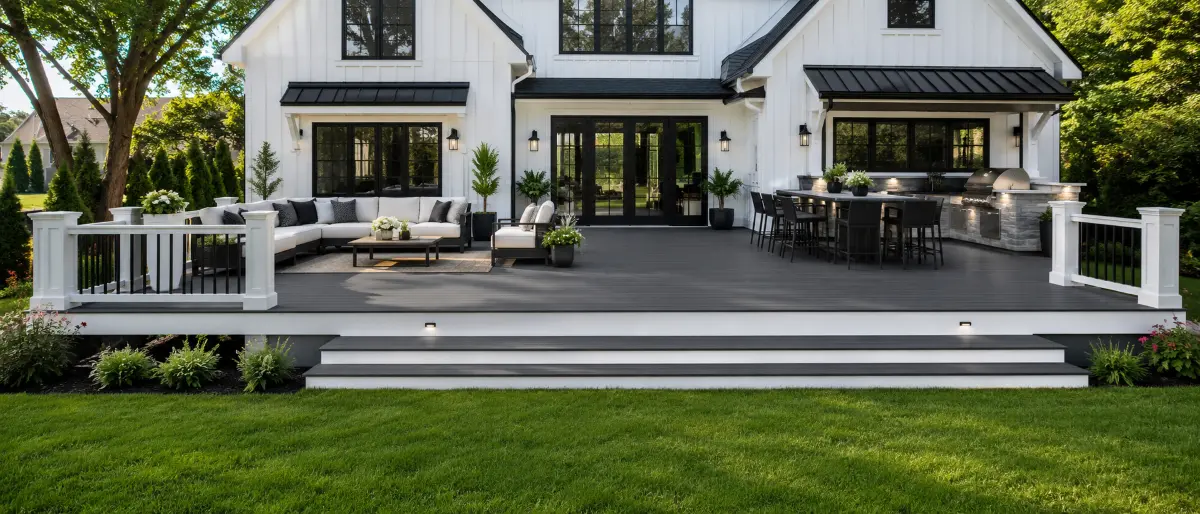
Cost Benefits of Composite Decks You May Not Realize
Summary: The composite deck cost benefits extend far beyond appearance. Although composite decking usually costs more to install than wood, homeowners may save money over time through reduced maintenance, longer material life, fewer repairs, and less frequent replacement. For Minnesota homeowners planning a long-term outdoor living investment, composite decking can provide more predictable ownership costs and greater everyday convenience.
Why Composite Decking Costs More Initially
Traditional pressure-treated wood is often the most affordable material at the beginning of a deck project. Composite decking usually has a higher material cost because it is manufactured to resist moisture, insects, fading, splintering, and many forms of everyday wear.
The initial estimate may make wood appear like the obvious value. However, installation price is only one part of the total cost of owning a deck. Homeowners should also consider maintenance supplies, labor, repairs, replacement boards, and the amount of personal time required to keep the deck in good condition.
A professionally designed composite deck may require a larger upfront investment, but its lower maintenance requirements can help offset that cost over many years.
Wood vs. Composite Decking Cost Comparison
The table below highlights several expenses homeowners should consider when comparing wood and composite decking.
| Cost Factor | Wood Decking | Composite Decking |
|---|---|---|
| Initial Material Cost | Usually lower | Usually higher |
| Staining and Sealing | Often required regularly | Not typically required |
| Repair Risk | May develop rot, cracks, or splinters | Designed to resist many common problems |
| Cleaning | Cleaning plus ongoing refinishing | Routine washing is usually sufficient |
| Long-Term Cost Predictability | Maintenance costs may vary | Generally more predictable |
Lower Maintenance Can Create Long-Term Savings
Maintenance is one of the most important composite deck cost benefits. A wood deck may need to be cleaned, sanded, stained, painted, or sealed repeatedly throughout its life. These projects require materials, tools, labor, and suitable weather conditions.
Homeowners who hire a contractor for ongoing deck maintenance must budget for recurring service costs. Those who complete the work themselves still invest substantial personal time.
Composite decking does not normally require routine staining or sealing. Most maintenance involves removing debris and washing the surface when needed. This can reduce both the direct cost of maintenance and the time spent managing the deck.
Composite Decking May Reduce Repair Costs
Minnesota weather can be hard on outdoor building materials. Moisture, snow, freeze-thaw cycles, summer heat, and seasonal temperature changes may contribute to cracking, warping, fading, and deterioration.
Wood boards can also splinter, loosen, or develop areas of rot. Repairs may involve replacing individual boards, fixing fasteners, sanding rough areas, or rebuilding damaged sections.
Composite decking is manufactured to resist many of these common concerns. No decking material is completely maintenance-free or damage-proof, but composite products can provide greater consistency and reduce the likelihood of certain recurring repairs.
Homeowners planning a new deck can learn more about Deck One’s deck construction and rebuild services. Homeowners with an existing structure may also benefit from deck renovation and redecking.
A Longer Useful Life Can Improve Overall Value
A lower installation price does not always produce the lowest long-term cost. If a deck requires frequent repairs or earlier replacement, the total ownership expense may eventually exceed the cost of a more durable material.
Composite decking is often selected by homeowners who expect to remain in their home for many years. The longer the deck is used, the more time there is for reduced maintenance costs to offset the higher initial investment.
Composite decking may also provide value through appearance. Consistent color, concealed fasteners, coordinated railings, and modern finishes can create a polished outdoor space that complements the home.
Convenience Is Also a Financial Benefit
Not every benefit appears on a contractor estimate. Time has value, especially during Minnesota’s limited outdoor season. A deck that requires less refinishing allows homeowners to spend more time using the space instead of maintaining it.
Composite decking may be especially practical for busy families, retirees, rental property owners, and homeowners who do not want recurring exterior maintenance projects. The ability to plan expenses more predictably can also make long-term budgeting easier.
Frequently Asked Questions About Composite Deck Cost Benefits
Is wood decking always cheaper than composite decking?
Wood decking is generally less expensive to install initially. However, staining, sealing, repairs, and possible board replacement can increase its total cost over time.
Does composite decking require maintenance?
Yes, but the maintenance is typically limited to routine cleaning. Composite decking usually does not require the recurring staining, painting, or sealing associated with wood.
How long does it take for composite decking to become cost-effective?
The answer depends on the deck size, selected materials, labor rates, maintenance frequency, and how long the homeowner keeps the deck. The financial benefit generally becomes more noticeable over longer ownership periods.
Can an existing wood deck be upgraded with composite decking?
In some cases, an existing deck frame can support new composite deck boards. A professional inspection is needed to determine whether the structure is sound and compatible with the new decking.
Is composite decking a good choice for Minnesota weather?
Composite decking is popular in Minnesota because it is designed to resist moisture, insects, splintering, and many forms of seasonal wear. Proper installation and product selection remain important.
Plan a Deck That Fits Your Home and Budget
The best decking choice depends on your budget, maintenance expectations, design goals, and how long you plan to use the space. Wood may provide a lower entry price, while composite decking may offer stronger long-term value through reduced upkeep, durability, and convenience.
Deck One builds and renovates custom decks throughout the Minneapolis metro area. Our team can help you compare materials, evaluate your existing structure, and design an outdoor living space that fits your home.
Ready to explore the long-term value of composite decking? Contact Deck One to discuss your project and request professional guidance.