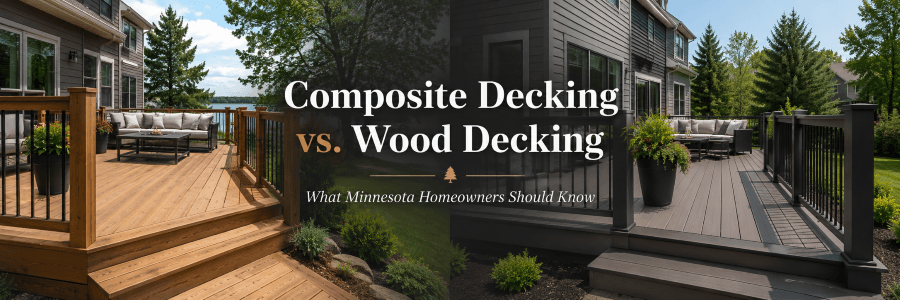
Composite Decking vs. Wood Decking: What Minnesota Homeowners Should Know
Summary: Composite decking Minnesota homeowners choose often delivers lower maintenance, better moisture resistance, and longer-lasting performance than traditional wood. While both materials can create a beautiful outdoor space, the right choice depends on budget, upkeep expectations, style preferences, and how well the deck needs to handle Minnesota weather.
When homeowners start planning a new deck, one of the biggest decisions is material choice. In many cases, the comparison comes down to composite decking and wood decking. Both options can look great and add value to a home. However, they perform differently over time, especially in a climate like Minnesota.
If you are comparing materials for a new build or an upgrade, understanding the pros and limitations of each option can help you make a smarter long-term investment. At Deck One, we work with homeowners who want a deck that fits their style, supports their outdoor lifestyle, and stands up to local weather conditions.
Why Composite Decking Minnesota Homeowners Prefer Is Gaining Popularity
Minnesota weather is hard on exterior structures. Decks must handle snow, rain, humidity, direct sun, freeze-thaw cycles, and seasonal temperature swings. These conditions can cause wood to absorb moisture, crack, warp, splinter, or require more frequent maintenance.
Composite decking offers a practical solution for many of these concerns. It is made from a blend of recycled wood fibers and plastic materials, which helps create a durable board with a more consistent surface. Many homeowners like composite because it delivers the appearance of wood without the same level of upkeep.
That does not mean wood is the wrong choice. Wood remains a classic decking material and can still be a strong option for homeowners who prefer its natural character and are prepared for regular maintenance.
Benefits of Composite Decking
Composite decking is often chosen for its long-term convenience. It typically does not require staining, sealing, or repainting. Routine care usually involves seasonal cleaning and basic maintenance rather than yearly refinishing.
Other benefits include:
- Better resistance to moisture and rot
- Less splintering than traditional wood
- Consistent color and board appearance
- Strong durability for active family use
- Available in a wide range of colors and finishes
For busy homeowners, composite decking can be appealing because it reduces ongoing work while maintaining a polished look. It is also a strong choice for homeowners planning a long-term outdoor living investment.
Benefits of Wood Decking
Wood decking continues to attract homeowners who want a more natural appearance. Many people appreciate the warmth, texture, and traditional look of real wood. Upfront material costs may also be lower, depending on the wood species selected.
Wood can be a good fit when homeowners want a classic deck design and do not mind regular care. It can also be painted or stained in many different ways, which allows more flexibility in changing the look over time.
Still, wood decks require more attention. To help preserve their condition, homeowners usually need to clean, stain, and seal the surface on a regular schedule. In Minnesota, exposure to moisture and harsh seasonal changes can speed up wear if the deck is not maintained properly.
Comparing Cost, Maintenance, and Lifespan
Cost is often the first factor homeowners consider. Wood decking usually has a lower initial price point. Composite decking often costs more upfront, but many homeowners find the reduced maintenance and longer service life worth the investment.
Over time, wood may require additional spending on stain, sealant, repairs, or board replacement. Composite can help reduce those recurring costs. For homeowners who want less maintenance and more predictable long-term performance, composite often makes financial sense.
If your existing deck is aging or showing signs of wear, it may help to review options for deck renovation and redecking. In some cases, homeowners can keep part of the existing structure while upgrading the surface materials and overall appearance.
Which Material Is Best for Your Home?
The best material depends on your goals. If you want lower maintenance, strong durability, and a cleaner long-term ownership experience, composite decking may be the better fit. If you value the authentic appearance of real wood and are comfortable with regular maintenance, wood may still be a good option.
It also helps to think beyond the deck boards alone. Railings, stairs, lighting, layout, and covered features all affect how the finished space looks and functions. For homeowners planning a new project from the ground up, our deck construction and rebuilds services can help bring the full vision together.
A well-designed deck should support the way your family lives outdoors. It should also complement the home and stand up well over time. That is why it is helpful to work with an experienced deck builder who understands the demands of Minnesota conditions and the strengths of each material.
FAQ: Composite Decking vs. Wood Decking
Is composite decking better than wood in Minnesota?
Composite decking is often better for Minnesota homeowners who want less maintenance and better moisture resistance. Wood can still be a good option, but it usually needs more upkeep.
Does composite decking last longer than wood?
In many cases, yes. Composite decking generally lasts longer because it resists moisture, rot, and splintering better than many wood products.
Is composite decking more expensive?
Composite decking usually costs more upfront. However, many homeowners save money over time because they spend less on staining, sealing, and repairs.
Does wood decking look more natural?
Yes. Many homeowners prefer wood for its natural grain and traditional appearance. Composite, however, now comes in many realistic finishes.
Can I replace wood deck boards with composite boards?
In some cases, yes. A contractor can inspect the framing to determine whether redecking with composite is a good option for your existing structure.
Ready to Build the Right Deck for Your Minnesota Home?
Choosing between composite decking and wood decking is not only about appearance. It is also about maintenance, durability, comfort, and long-term value. If you want expert guidance on the best material for your home, Deck One is here to help.
Whether you are planning a brand-new deck, replacing an aging structure, or exploring a redecking project, our team can help you create an outdoor space built for Minnesota living. Contact Deck One today to schedule a consultation and start planning a custom deck that fits your home and lifestyle.